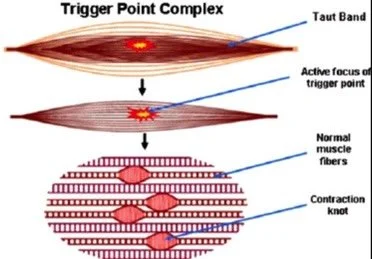
Myofascial trigger points are sensitive knots or bands in muscles that can cause pain, sometimes referred to as myofascial pain syndrome. These trigger points can develop from injury or overuse and may lead to persistent pain, even after rest.
Besides localized pain, trigger points can cause referred pain, meaning the pain is felt in another area of the body. Other symptoms can include muscle stiffness and reduced range of motion.
Causes
Injuries, repetitive motions, poor posture, and stress can all contribute to the development of trigger points.
Proposed mechanisms include:
Local “energy crisis”: sustained contraction → poor blood flow → hypoxia, waste buildup, inflammatory mediators, and ongoing nociceptor activation.
Peripheral and central sensitization: chemical mediators and constant input from trigger points sensitize spinal and brain pathways, amplifying pain.
Trigger points in chronic pain conditions
Trigger-point–related myofascial pain is common in chronic pain clinics, reported in the vast majority of people with chronic musculoskeletal pain.
Here is a non podiatry example. Headache and migraines: active trigger points in head/neck muscles are prevalent; palpation can provoke attacks or contribute to tension-type headache.
Another example is in Widespread pain / fibromyalgia: trigger points may coexist and contribute peripheral nociceptive “drive” in nociplastic pain states.
Typical findings include
Local tender nodule in a taut band
Referred pain pattern and sometimes a local twitch response
Reduced range of motion and muscle weakness
Treatments we offer
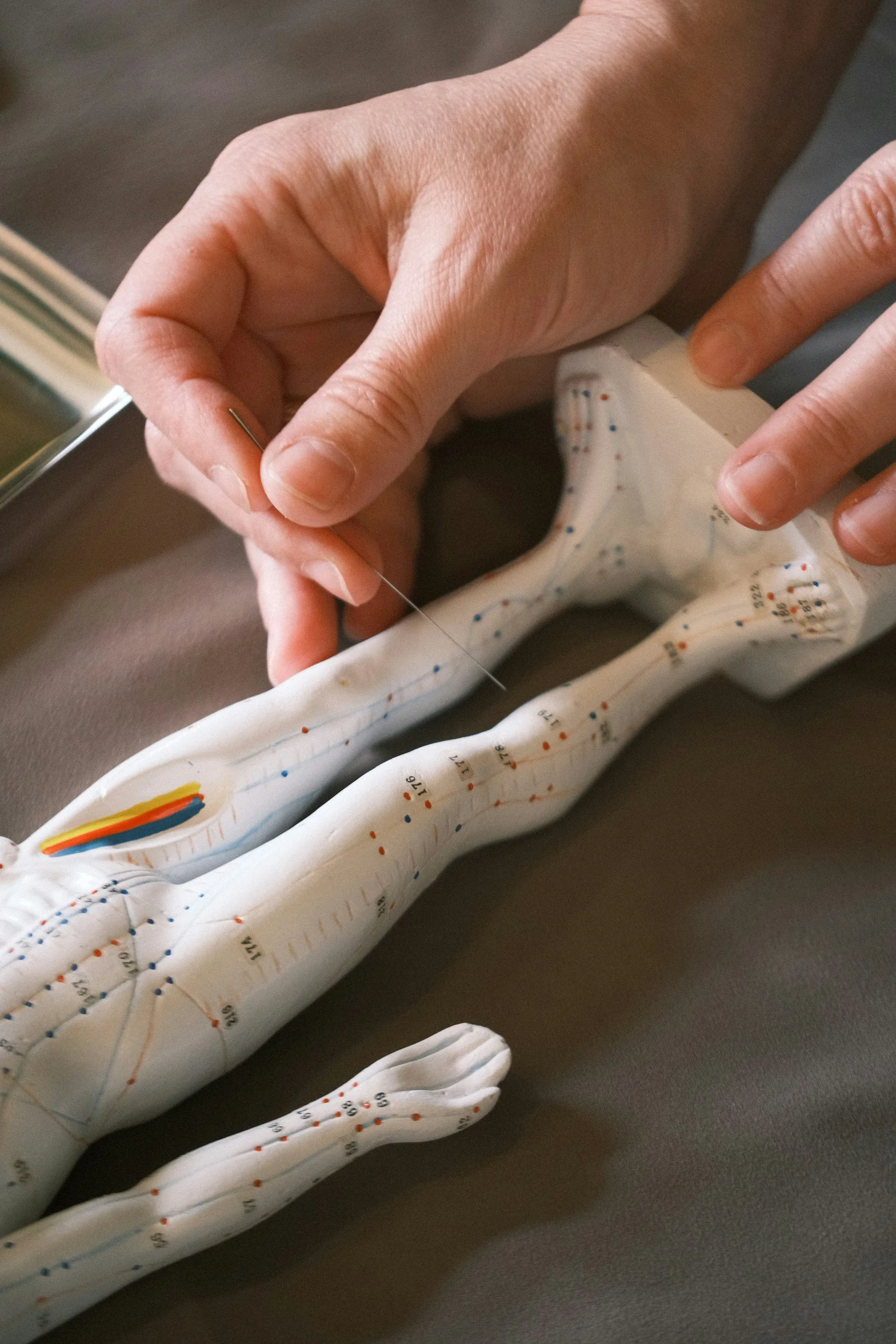
Acupuncture: Placing needle into trigger point with or without injectate. A 2025 Meta-analysis found that this was more effective than other non-drug therapies for pain and disability in myofascial pain syndrome. (1) We may also use electro acupuncture techniques.
Deactivate trigger points and restore movement: Multimodal care such as stretching, massage, muscle energy techniques, osteopathic techniques, exercise therapy, physical therapy/ physiotherapy techniques.
Other multimodal care
Physical therapy, exercise, and posture correction
Cognitive and psychological therapies
Pharmacologic options where appropriate
References
Needling trigger points for treating myofascial pain syndrome: A systematic review and meta-analysis.
March 2025·Yuwei Zhao, Yun Yang, Xiehe Kong, Jie Liu, Jue Hong, Yanting Yang, Yue Zhao, Xinyun Huang, +1 more authors
DOI10.1016/j.ctcp.2025.101978